Stucco chimney repair in Denville, NJ
The crack is the symptom. The water is the problem.
Stucco hides what is happening behind it better than any other chimney finish. That is the reason to look closely before anyone starts patching.
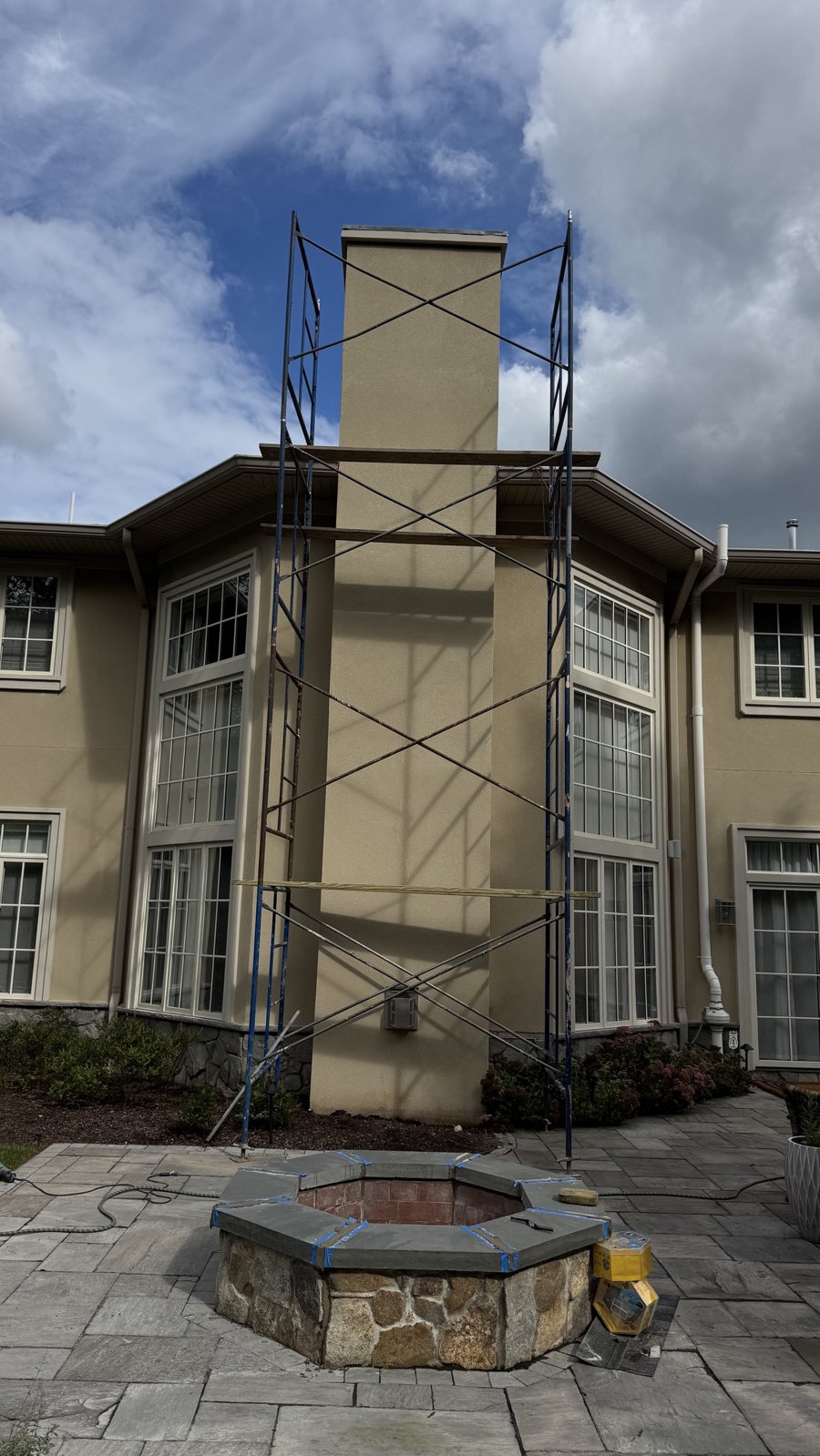
Denville sits right in the middle of Morris County, fifteen minutes from our base in Montville. Plenty of the larger homes here, in town and around the lakes, have tall exterior chimneys finished in stucco to match the house, like the one above. They look clean and solid from the yard, and that is exactly the issue: stucco can look nearly perfect while water has been getting in behind it for years.
A cracked brick chimney shows you its damage. A stucco chimney usually shows you a stain, a hairline crack or a hollow sound, and the real damage is behind the surface.
Two kinds of stucco chimney
They look identical from the driveway and they are not the same repair.
Stucco over masonry. A brick or block chimney with cement stucco applied over it. When water gets behind the stucco, it freezes, pushes the stucco off the masonry, and the stucco cracks and eventually comes away in sections. The chimney underneath is usually sound.
A framed chase. A wood-framed box built around a metal flue, sheathed and finished in stucco or in synthetic stucco (EIFS) to look like masonry. Water behind the finish here does not just damage the stucco. It soaks the sheathing and rots the framing, and it can reach the inside wall of the house. This is the one that turns a stucco patch into a structural repair if it is left alone.
Telling them apart is the first thing we do, because it decides everything after it.
Where the water gets in
Stucco is rarely where the water starts. It is where the water shows up. On the chimneys we open up, the source is almost always one of three places.
The top. On a framed chase, a chase cover that has rusted through, or one made flat so it holds standing water instead of shedding it. On a masonry chimney, a cracked crown or a missing cap. Water entering at the top runs down behind the stucco the entire height of the chimney.
The roofline. Where the chimney passes through the roof, the flashing has to be tied in behind the stucco. Too often it is just caulked or roof-cemented against the surface, which holds for a season or two and then opens up.
The base. Stucco systems are designed with a weep screed at the bottom so any water that gets behind them can drain out. When it is missing, or buried under mulch or a patio, the water has nowhere to go.
What to look for from the yard
Dark streaking that stays after the rest of the wall has dried. White chalky deposits. Cracks running along the corners of the chimney or out from the roofline. Areas that bulge, blister or sound hollow when tapped. Inside the house, staining or soft drywall on the wall next to the chimney, or a musty smell near it in the attic.
Fine hairline cracks across a flat face, with no staining around them, are common in cement stucco and are not an emergency on their own. They are worth watching and worth sealing, not tearing off.
How we repair it
First we find out how far the damage goes. Tapping the face for hollow areas, probing for moisture on a framed chase, and looking at the top and flashing before anything is touched. You get the photos and the findings before we talk about scope.
Damaged stucco is cut back to sound, well-bonded material, not feathered over. Wet or rotted sheathing on a chase is replaced before anything goes back on top of it. New stucco goes on in proper coats over lath, and the water source gets fixed in the same job: a sloped stainless chase cover or a rebuilt crown at the top, counter flashing tied in properly at the roofline, and a working weep at the base.
On color: new stucco next to fifteen-year-old stucco almost never matches, no matter how carefully the patch is tinted. When a repair will be visible, we will tell you that up front and give you the option of a finish coat over the whole face so the chimney reads as one surface again.
Tall chimneys like the one above are worked from scaffolding, not ladders. It is safer, and it is the only way to get a consistent finish across a full face. Patios, plantings and anything else below get protected before the first frame goes up.
Common questions
Why is the stucco on my chimney cracking?
Hairline cracks are normal in cement stucco and usually cosmetic on their own. The cracks that matter are the ones letting water in: wider cracks, cracks that run along the corners or around the flashing, and anything with staining below it. Water behind stucco freezes in winter, pushes the stucco away from what it is attached to, and the cracking accelerates from there. The cause is usually at the top of the chimney or at the roofline rather than in the stucco itself.
How do I know if water is getting behind my stucco chimney?
Look for dark streaks or staining that stays after the surface dries, efflorescence (white chalky deposits), bulging or blistering areas, and stucco that sounds hollow when tapped. On a framed chimney, soft spots, stains on the inside wall next to the chimney, or a musty smell in the attic near it are later signs. A moisture probe confirms it without tearing anything open.
What is the difference between a stucco chimney and a stucco chimney chase?
A stucco chimney is usually a brick or block chimney with cement stucco applied over the masonry. A chase is a wood-framed box built around a metal flue, finished in stucco or synthetic stucco (EIFS) to look like masonry. They look the same from the yard but fail differently. Water behind stucco on masonry damages the stucco. Water behind stucco on a framed chase rots the framing, which is a much bigger repair.
Can you just patch the cracked areas?
Small, sound areas can be patched, and we will tell you when that is the right call. The problem is that a patch over stucco that has already separated from the wall fails again, and a patch that ignores where the water came from fails faster. We tap and probe first, cut out to sound material, and fix the water source in the same job. On color, a patch rarely matches weathered stucco, so we will tell you up front whether a full finish coat on that face is the better answer.
Where does the water usually come from on a stucco chimney?
Most often from the top: a rusted or flat chase cover that holds water, a cracked crown, or a missing cap. Next most common is the roofline, where the flashing meets the stucco and was sealed with caulk or roof cement instead of being properly counter-flashed. Missing or buried weep screed at the base, which lets water drain out from behind the stucco, is the third.
Do you need scaffolding for a stucco chimney repair?
For a full-height exterior chimney, usually yes. Ladders do not give a safe, steady working position for stucco work across a whole face, and a patch done off a ladder looks like it. Scaffolding goes up on the side of the house with the patio, plantings and anything else underneath protected first.
Do you work on stucco chimneys around the Denville lakes?
Yes. Indian Lake, Cedar Lake, Rainbow Lakes and the rest of Denville are about fifteen minutes from our base in Montville. We also cover Rockaway, Boonton, Mountain Lakes, Parsippany, Morris Plains and the rest of Morris County.
Before anyone patches anything
The most expensive stucco chimney repair is the second one, after a patch went over a problem nobody looked for. So the first visit is an inspection of the whole chimney, top to base, with photographs of what we find.
If it turns out to be cosmetic cracking on a dry chimney, we will tell you that and seal it. If the water is coming from somewhere else entirely, that is what we will fix.
Stucco chimney showing stains or cracks?
We find where the water is coming from and show you before we recommend anything. Denville, the lake communities and the rest of Morris County.
CSIA Certified · NJ HIC #13VH14202300 · Serving Denville & Morris County