Chimney liner installation in Parsippany, NJ
Swept, inspected, then relined to fit the appliance.
A liner is only as good as what is known about the flue before it goes in. On this Parsippany job, that started with a sweep.
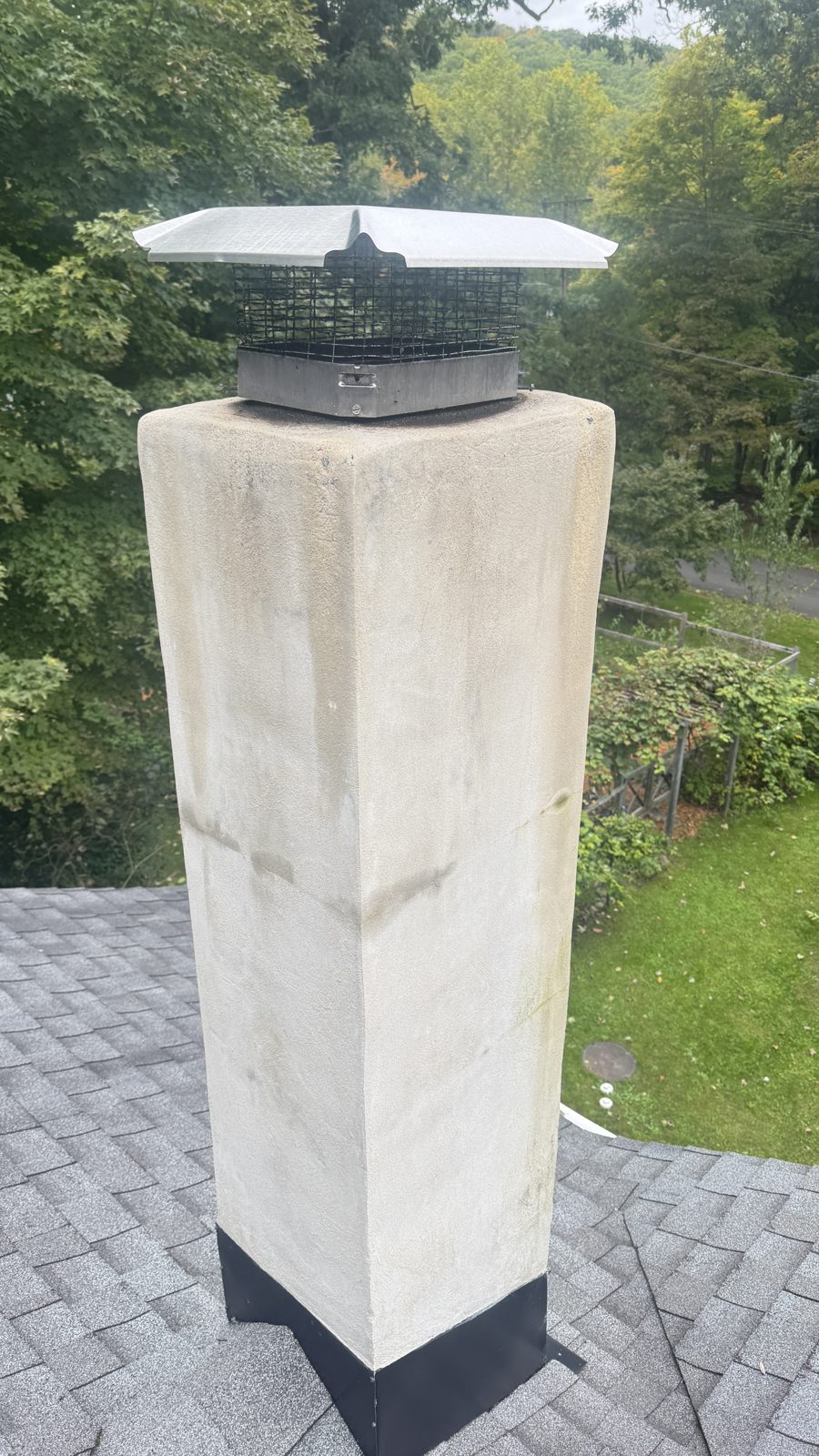
FlueRite installs stainless steel chimney liners in Parsippany, sized to the appliance the flue serves and filed with the township on New Jersey form F370. On this job we swept the chimney first so the flue could be properly inspected, then installed the liner as one continuous run from the appliance to the top of the chimney.
- Location
- Parsippany-Troy Hills, NJ 07054
- Work done
- Chimney sweep and stainless steel liner installation
- Liner
- Stainless steel, one continuous run, sized to the appliance
- Permit
- NJ form F370, filed by FlueRite
- Completed
- Fall 2026
Parsippany chimneys and the age of the tile
Parsippany-Troy Hills is the largest township in Morris County, and most of its housing went up between the 1950s and the 1970s: capes, split-levels and ranches in Lake Hiawatha, Lake Parsippany, Mount Tabor and along Route 46. Those houses were built with clay tile flues, and much of that tile is now fifty to seventy years old.
It is also housing where the heating system has usually been replaced at least once. That matters more to the chimney than most homeowners realize, because a flue is sized for the appliances it was built to serve, and a new boiler or furnace can change that overnight.
Why the sweep comes first
A liner job does not start with the liner. It starts with getting the flue clean enough to see. Soot and creosote coat the inside face of the tile and hide exactly what needs looking at: cracked tile, open mortar joints, sections that have shifted out of line. Sweeping first means the inspection afterward shows the flue as it actually is.
It also clears the path. A stainless liner is fed down from the top of the chimney, and buildup on the tile, or old nesting material on the smoke shelf, can snag it on the way down.
Signs a Parsippany chimney needs a liner
Your boiler or furnace was replaced. If the new unit is high-efficiency and vents out the side of the house through PVC, the water heater may now be alone in a flue built for two appliances. That is an orphaned water heater. Its exhaust is too weak to keep that much flue warm, so it cools, condenses, and can spill back into the basement instead of rising.
Tile in the firebox or at the cleanout. Clay flue tile fails from the inside face. Terracotta-colored fragments at the bottom of the chimney mean the flue above them is breaking up.
You are adding a stove or insert. A sealed appliance needs a flue sized to its outlet, not the oversized opening that was built for an open fireplace.
There has been a chimney fire. Even a small one heats the tile fast enough to crack it straight through.
White staining or a strong smell. White deposits on the chimney, or a sulfur or campfire smell in humid weather, can point to condensation and a flue that is not drafting properly.
How the liner goes in
The chimney is measured and the liner is ordered to that length, then fed down from the top as one continuous piece with no joints along its run. At the bottom it connects to the appliance through a tee or connector sized to the appliance outlet. At the top it is sealed and capped so rain and animals stay out.
Size follows the appliance. The liner diameter comes off the appliance itself, not off the size of the old clay flue. An oversized liner has the same draft problem as the oversized flue it replaced.
Material matters. Stainless steel handles the acidic condensate that modern gas appliances produce, where lighter materials do not. Quality stainless liners carry a lifetime manufacturer warranty.
Permits in Parsippany-Troy Hills
Liner installation is the one part of chimney work that needs a permit in New Jersey. It falls under the mechanical subcode of the Uniform Construction Code, is filed on form F370 with the township construction office, and gets inspected. We file it ourselves on every liner we install. Sweeping, caps, crowns, flashing and masonry need no permit.
Chimney liner questions from Parsippany homeowners
How much does a chimney liner cost in Parsippany?
It depends on the chimney: the height of the flue, the diameter the appliance needs, whether the flue has bends or offsets, whether insulation is required, and whether old tile has to be broken out for the liner to pass. That is why every liner quote we give follows an inspection. A price given over the phone without seeing the flue is a guess.
Do I need a chimney sweep before a liner is installed?
Yes. Sweeping removes the soot and creosote that hide cracks and open joints, so the inspection is accurate, and it clears the flue so the liner can be fed down without snagging. On this Parsippany job, the sweep and the liner were done as one project.
How long does chimney liner installation take?
Most single-flue liner installations are completed in one day once the liner is on site. The longer part is the gap between measuring and installing, because the liner is ordered to the measured length of your chimney.
My water heater is the only thing left venting into the chimney. Is that a problem?
Usually, yes. If a high-efficiency boiler or furnace now vents through PVC out the side of the house, the water heater is left alone in a flue sized for two appliances. Its exhaust cannot warm that much flue, so it condenses and can spill back into the house. The fix is relining the flue down to the size the water heater needs.
Does a chimney liner need a permit in Parsippany?
Yes. Liner installation requires New Jersey form F370 under the mechanical subcode, filed with the Parsippany-Troy Hills construction office and inspected. We handle the filing.
How close is FlueRite to Parsippany?
We are based in Montville, which borders Parsippany-Troy Hills, so most of the township is ten to fifteen minutes away. Lake Hiawatha, Lake Parsippany, Mount Tabor and the neighborhoods along Route 46 and Route 10 are all in our regular service area.
Thinking about relining?
Start with the inspection. We sweep, look at the flue, show you what we found, and tell you whether it needs a liner. If the flue is sound and serving the appliance it was built for, the answer is no, and we will tell you that.
Need a liner in Parsippany?
Sweep and inspection first, then a quote based on what is actually in your flue. Parsippany, Lake Hiawatha, Mount Tabor and the rest of Morris County.
CSIA Certified · NJ HIC #13VH14202300 · F370 Filed On Every Liner