Does my chimney need a liner?
Four situations where the answer is yes.
Relining is the most expensive thing we do and the easiest thing to oversell. So here is the honest version of when it is actually necessary.
Morris County, NJ · Liners & Relining
The liner is the part of the chimney nobody has ever seen. It is also the only part whose failure can hurt somebody. Everything else on a chimney — the crown, the cap, the brick, the flashing — exists to keep water away from it.
Which is why relining is the right recommendation more often than homeowners want to hear, and also the easiest thing in this trade to sell to someone who does not need it. Nobody can see up their own chimney, so nobody can check the claim. Four situations genuinely call for it. Here they are, and here is how to tell which one you are in.
1. The clay tile has cracked
Most chimneys in North Jersey are lined with clay tile: square or round sections stacked one on another with mortar joints in between. It is a good material and it lasts a long time, but it fails in one specific way. It cracks.
Heat is the usual cause. A fire warms the inner face of the tile fast while the outer face stays cold, the two surfaces try to expand at different rates, and the tile fractures. Water does the rest — anything entering from a failed crown or an open flue sits in the joints and freezes, and the mortar between tiles washes out over years.
The signs you can see for yourself: fragments of terracotta-colored tile in the firebox or at the cleanout door, a strong sulfur or campfire smell in the room when the fireplace is not in use, or a fireplace that has started smoking into the room when it never used to.
2. A high-efficiency boiler left an appliance orphaned
This is the one almost nobody gets told about, and it is common in this area right now because so many boilers have been replaced in the last ten years.
Here is the sequence. A house has a boiler and a water heater, both venting into one masonry flue, and the flue was sized for the combined output of the two. The boiler gets replaced with a modern high-efficiency unit, which vents its own exhaust through PVC out a sidewall and never touches the chimney again. Correct, and a good upgrade.
But the water heater is still connected to that flue, and it is now alone in a space built for twice the load. A flue draws because hot gas rises and pulls more behind it. One small appliance cannot produce enough heat to warm that much masonry and establish the draft. The exhaust rises slowly, cools against cold brick, condenses into moisture that eats the liner from inside, and on a cold day it can stall entirely and spill back into the basement.
That is an orphaned appliance, and it is a code issue in New Jersey. If your boiler has been replaced with a high-efficiency unit and your water heater still vents into the chimney, that flue needs to be resized. It is not an upsell, it is the other half of the boiler job, and it frequently gets left undone.
3. A new appliance is being connected
A liner is not generic. It is sized to the appliance it serves, and the numbers come off the appliance rating rather than off what happens to already be there.
Putting a wood stove or an insert into an existing masonry fireplace is the clearest case. The firebox opening was built for an open fire, and the flue above it is far larger than a sealed appliance needs. Vent the insert straight into that oversized flue and the exhaust cools before it reaches the top, which means poor draft, heavy creosote and a smoking appliance. The insert needs a correctly sized liner running from the appliance to the top of the chimney.
The same logic applies to a new furnace or water heater, in the opposite direction. A flue that is too small cannot carry the volume. Either way, the liner follows the appliance.
4. There has been a chimney fire
No exceptions on this one. A chimney fire burns hot enough to crack clay tile straight through, and it can do it in a chimney that was sound the day before. Thermal shock can also open the joints without visibly breaking the tile faces, which is worse, because the flue looks intact on a casual look.
Chimney fires are also quieter than people expect. Not every one roars. A slow one can burn itself out having damaged the flue, and the homeowner never knows it happened. If you have found puffy or honeycombed creosote, discolored or warped damper components, or pieces of tile in the firebox, get a camera up there before the next fire.
Why you cannot tell from inside the house
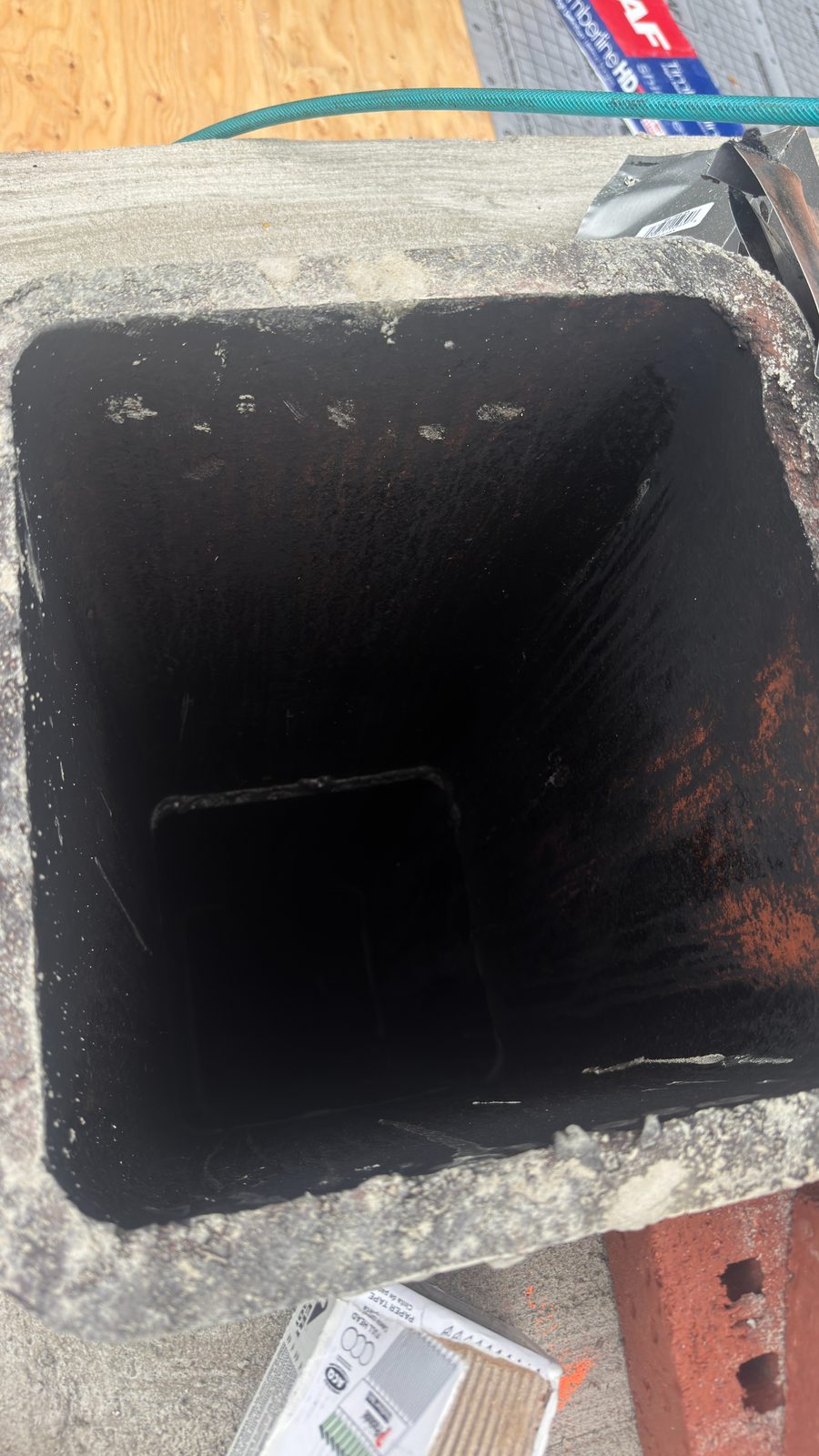
Every chimney in the photograph above looked fine from the living room. That is the recurring problem with flues: the damaged surface is the inner face of the tile, and there is no vantage point from the firebox, the roof, or the ground that shows it.
A camera scan — a Level 2 inspection — is the only way to see the whole flue from the smoke chamber to the crown. It produces images of every tile and joint, and it is what any recommendation to reline should be based on. Anyone quoting a liner without having put a camera up the chimney is guessing, and you are entitled to see the pictures.
Clay tile against stainless
When a flue does need relining, stainless is what goes in. The reason is structural rather than promotional: a stainless liner is one continuous piece from the appliance to the top, with no joints and no separate sections that can separate.
Grade matters more than homeowners are usually told. The condensate from modern high-efficiency appliances is acidic, and the 316 series of stainless is specified to handle it where lighter grades and aluminum are not. Aluminum liner has a narrow legitimate application and gets installed well outside it, because it is cheap. Ask what grade is being quoted.
Insulation matters too in this climate. An insulated liner keeps flue gases warm the whole way up, which maintains draft and reduces the condensation that damages the liner in the first place.
Permits in New Jersey
Relining is the one part of chimney work that requires a permit here. It falls under the mechanical subcode of the New Jersey Uniform Construction Code and requires form F370 to be filed. Sweeping, masonry, crowns, caps and flashing all require nothing.
That distinction is worth knowing before you hire anyone. A contractor who tells you a liner in New Jersey needs no paperwork is either unfamiliar with the code or intending to skip the inspection. We file the F370 on every liner we install, and the signature on it is ours.
Common questions
How do I know if my chimney needs to be relined?
There are four common triggers. Pieces of clay tile turning up in the firebox or at the cleanout. A camera inspection that finds cracked or spalling tile, or open joints between tiles. A new appliance being connected, since a liner has to match the appliance it serves. And any chimney fire, without exception. Outside of those, age matters: if the house is over twenty five years old and nobody has ever put a camera up the flue, the honest answer is that nobody knows yet.
Can a cracked chimney liner leak carbon monoxide into the house?
Yes, and that is the whole reason the liner exists. The flue is the barrier between combustion gases and the structure of your home. When clay tile cracks or the mortar joints between tiles fail, there is a path for those gases to move into the surrounding masonry and, from there, into wall cavities and living space. Carbon monoxide has no smell and no color, so a breached flue can run for a long time before anyone notices.
My boiler was replaced with a high-efficiency unit and now only the water heater vents into the chimney. Is that a problem?
It is, and it is one of the most common problems we find. A high-efficiency boiler vents through PVC out a sidewall, which leaves the water heater as the only appliance on a flue that was sized for two. The exhaust from one small appliance cannot warm and fill that much space, so it cools, slows, condenses, and can spill back into the house instead of rising. This is called an orphaned appliance. The fix is relining down to the correct diameter for the single appliance, usually a small stainless liner.
Why can a chimney look perfect and still be unsafe?
Because the damage is on the inside face of the flue, and nothing about it is visible from the firebox, the roof, or the ground. A chimney with tight mortar joints, a clean crown and a new cap can have a flue cracked from top to bottom. That is not an edge case, it is the normal presentation. A camera scan is the only way to know.
What is the difference between a clay tile liner and a stainless steel liner?
Clay tile is the original material and it fails in a predictable way: it cracks. Individual tiles are stacked with mortar joints between them, and heat cycling, moisture and structural movement break both the tiles and the joints. A stainless liner is one continuous piece with no joints and nothing to separate, sized precisely to the appliance and rated for the fuel it serves. Properly installed, it is designed to last the life of the house.
Does chimney liner installation require a permit in New Jersey?
Yes. Liner installation falls under the mechanical subcode of the New Jersey Uniform Construction Code and requires form F370. That distinguishes it from the rest of chimney work, since sweeping, masonry, crowns, caps and flashing all require no permit. We file the F370 ourselves. If a contractor tells you a liner needs no paperwork in New Jersey, that is a reason to keep calling.
How long does a stainless chimney liner last?
A correctly specified and correctly installed stainless liner is meant to last the life of the home, and quality liners carry a lifetime warranty. Grade matters more than most homeowners are told. Modern high-efficiency appliances produce acidic condensate, and the 316 series of stainless resists that far better than lighter grades or aluminum. Aluminum has a narrow legitimate use and gets installed well outside it.
When the answer is no
Plenty of chimneys we scan do not need relining. A flue with sound tile and tight joints, serving the appliance it was built for, is doing its job and should be left alone. Sometimes what looks alarming from the firebox is heavy creosote that comes off with a sweep, and sometimes an open joint at the smoke chamber can be sealed without touching the rest of the flue.
Relining is most of our work, which is exactly why we would rather tell you the flue is fine than have you hear later that it was. You will see the camera images either way.
Find out what is actually in your flue.
A camera scan from the smoke chamber to the crown, with the images in your hands before anyone discusses scope.
CSIA Certified · NJ HIC #13VH14202300 · F370 Filed On Every Liner