Chimney relining in Hopatcong, NJ
The orphaned water heater problem.
When a high-efficiency boiler or furnace goes in, it vents through PVC out the side of the house. That leaves the water heater as the only appliance still connected to the masonry chimney — in a flue that was sized for two appliances. A single water heater cannot generate enough heat to establish draft in a flue that large. The exhaust stalls, cools, condenses on the flue wall, and spills back into the basement. This is called an orphaned water heater, it is extremely common after a heating system upgrade, and the fix is relining the flue down to the correct diameter for one appliance.
- Draft and spillage tested before and after, so you can see the fix worked.
- Flue resized to the appliance — typically a 4" or 5" stainless liner.
- Permit pulled and UCC-F370 filed by us on every relining job.
Hopatcong is Sussex County, and the housing stock is unusual
Hopatcong is the one town on this list that is not in Morris County — it sits in Sussex, which means a different county seat, a different construction office, and different inspection scheduling than everything around Lake Hopatcong to the south. The housing stock matters more, though. A large share of homes here started as seasonal lake cottages and were converted to year-round use over the decades, picking up heating systems as they went. That produces exactly the condition we see most: a chimney originally built for one purpose, now venting an appliance nobody planned for when the flue was laid up. Oversized flues and orphaned appliances are the norm here, not the exception.
Relining requires a permit. Here is why that protects you.
Relining a flue is mechanical subcode work under the New Jersey Uniform Construction Code, because it changes the venting system for a fuel-fired appliance. It requires a construction permit and the state UCC-F370 Chimney Verification for Replacement of Fuel-Fired Equipment form, signed by a certified professional. The reason this matters on an orphaned water heater specifically: the F370 is the document that certifies the chimney is suitable for the appliance being vented into it. If a heating contractor replaced your boiler and nobody addressed the now-oversized flue, there is a real question about whether that verification was ever properly made. We pull the permit, we file the form, and our signature is the one on it.
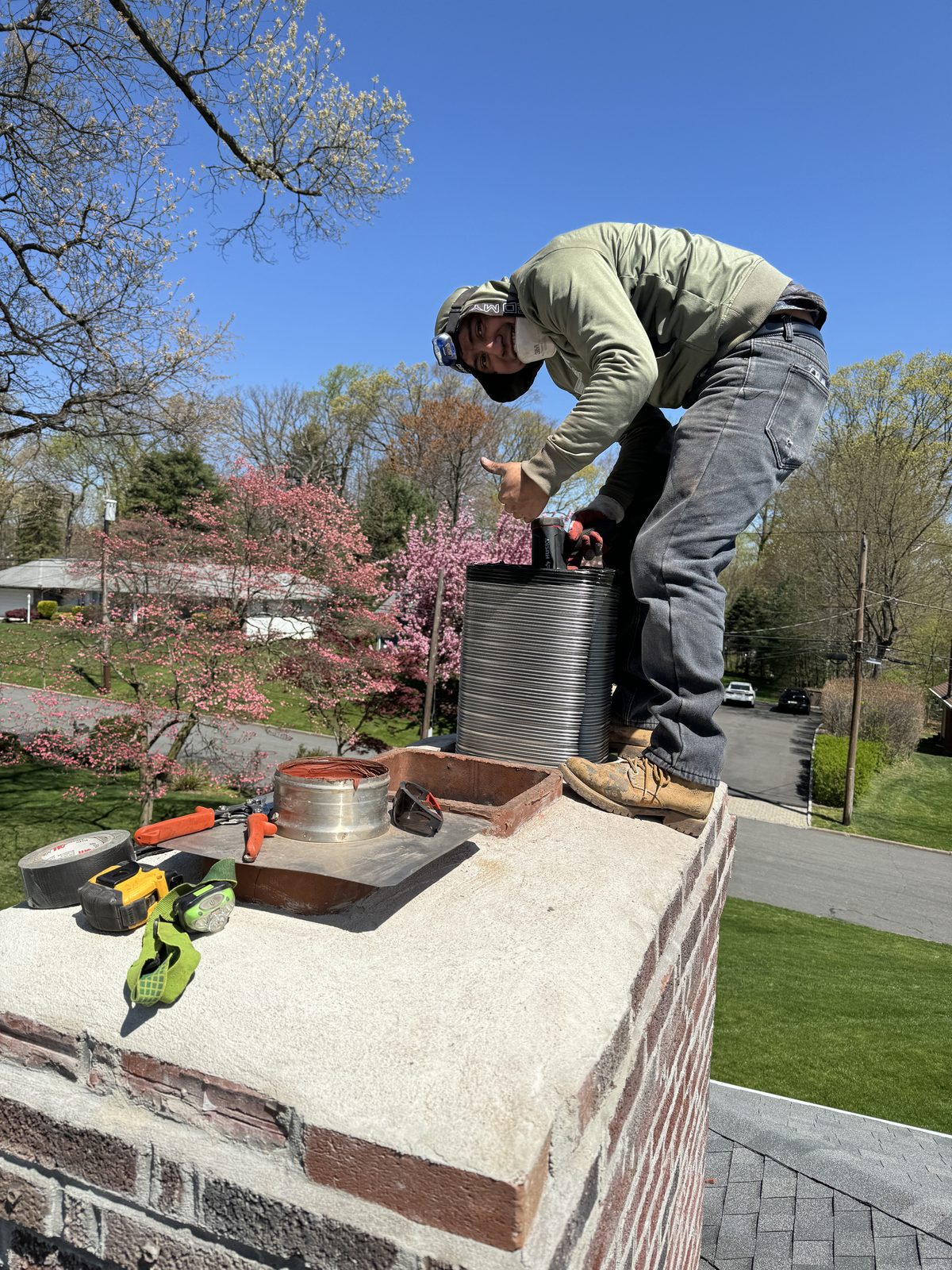
A recent Hopatcong job
High-efficiency boiler had gone in the year before. The water heater was left venting alone into a flue built for both appliances, and the homeowner had noticed a damp, sour smell in the basement through the winter without connecting it to the chimney. That smell was condensed flue gas. We poured a new crown, dropped a properly sized stainless liner for the water heater, capped it, and ran a spillage test at the draft hood before and after. The before test failed. The after test passed and we showed the homeowner both.
What chimney work costs in Hopatcong
Relining an orphaned appliance is usually a smaller job than a full fireplace reline, because the flue diameter is smaller and the run is often shorter. Permit and F370 filing are included in the quote.
Ranges reflect typical Hopatcong jobs. Access, chimney height, and what we find on inspection move the number. Every quote is confirmed on site in writing before work begins.
Questions we get in Hopatcong
How do I know if my water heater is orphaned?
If your boiler or furnace was replaced with a high-efficiency unit that vents through white PVC pipe out a sidewall, and your water heater still vents into the masonry chimney, it is orphaned. That is the whole test. It is worth having the draft checked regardless of whether you have noticed symptoms.
What are the symptoms?
A damp or sour smell in the basement, moisture or rust on the water heater's draft hood, white staining on the outside of the chimney, or a carbon monoxide detector that has gone off once and never again. Any one of those is worth a call.
Is this dangerous or just inefficient?
It is a combustion safety issue, not an efficiency issue. Spillage means combustion gas is entering the living space rather than leaving through the flue. That gas contains carbon monoxide. It is not something to schedule for next season.
Get a straight answer on your Hopatcong chimney.
We inspect first, show you the photos, and quote what the chimney actually needs. Nothing more than that.
CSIA Certified · NJ HIC #13VH14202300 · Serving Hopatcong, Sussex County