How a chimney liner is installed
What happens on the roof, start to finish.
Most homeowners agree to a liner without anyone explaining what the job involves. Here is the whole thing in the order we do it, with photos from jobs in Chester, Hopatcong and East Hanover.
By FlueRite Chimney Co. · CSIA Certified · Montville, NJ
· 8 min read
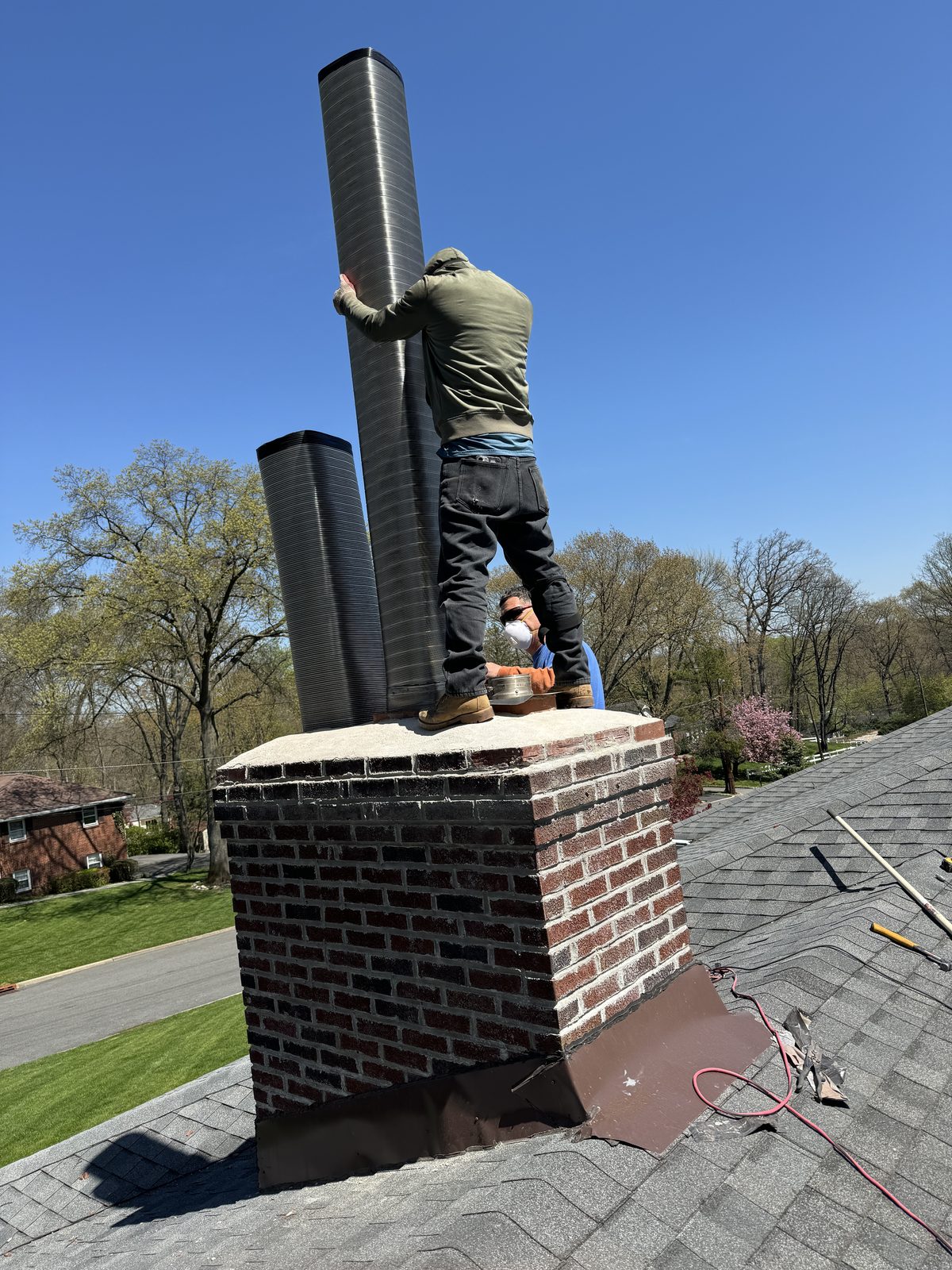
A stainless steel chimney liner is installed from the roof down. The flue is inspected by camera and measured, the liner is sized to the appliance or fireplace it serves, then lowered the full height of the flue, connected at the bottom, sealed at the top and capped. Most installs take one day. In New Jersey the work needs a UCC permit, form F370, filed before it starts.
- The size comes from the appliance or fireplace, not from the old flue.
- Insulation is required on some chimneys and worth adding on others.
- The F370 permit is filed before the work, and the town inspects after.
- You should see the flue on camera before and after.
What happens before a liner is installed?
The job starts with a camera, not a ladder. A liner is only the right answer if the flue actually needs one, so the first step is running a camera down the full height of the flue and recording what is there: cracked or offset tile, open mortar joints, the size and shape of the flue, and any bends on the way down. NFPA 211, the national standard for chimneys, calls for a Level 2 inspection whenever a flue is relined, and this is it.
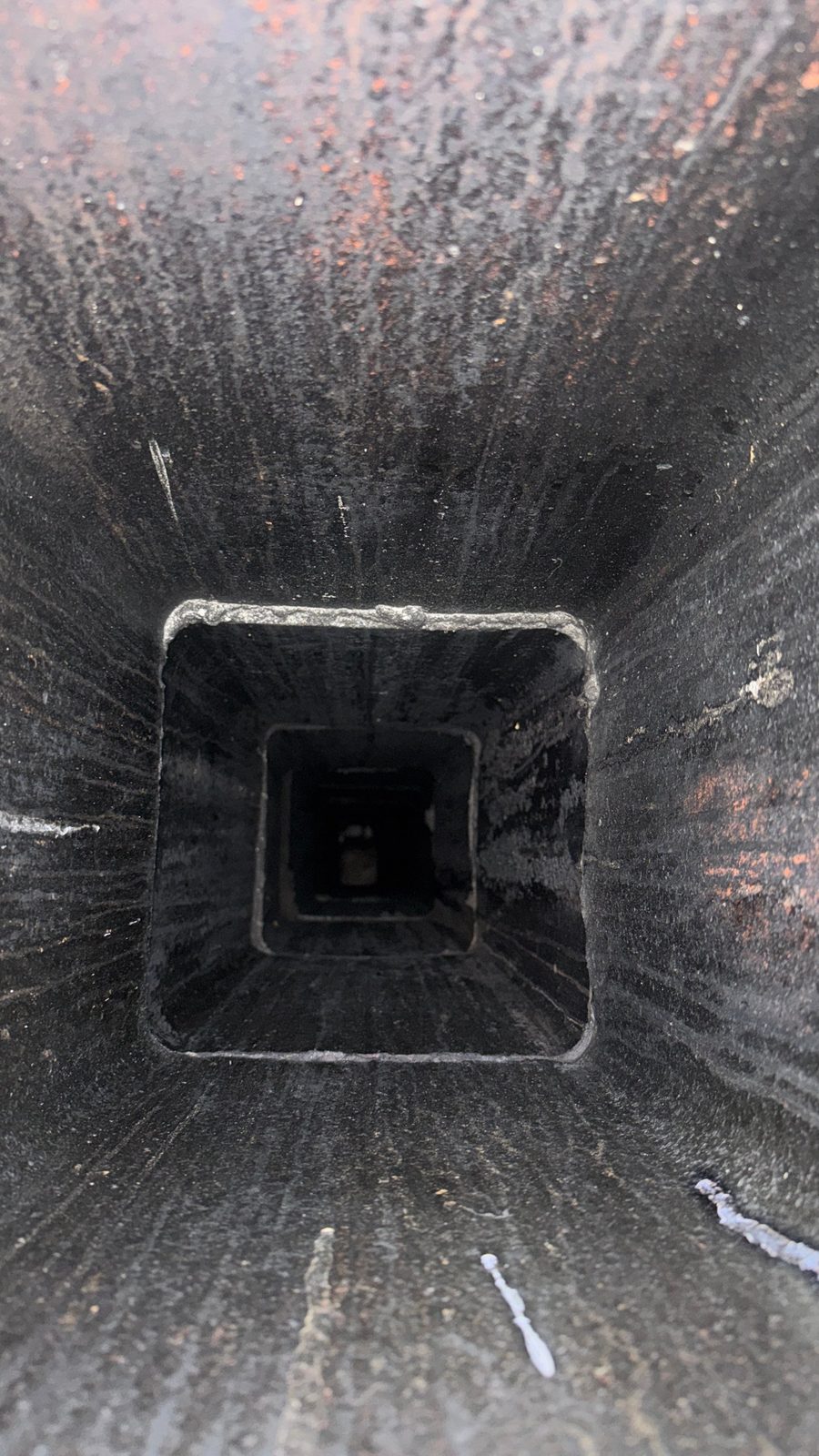
The second part is measuring. We need the height of the flue from the appliance connection or the smoke chamber to the top of the chimney, the inside dimensions of the tile, and the specifications of whatever the flue serves. For a furnace, boiler or water heater, that means the manufacturer's venting requirements and the input rating on the data plate. For a fireplace, it means the size of the fireplace opening.
If the camera shows a sound flue that is already the right size for what it serves, the job stops here, and you get the footage. Not every chimney needs a liner, and the four situations that do are worth knowing before anyone quotes you.
How is a chimney liner sized?
A liner is sized to what it vents, not to the chimney it goes into. This is the most common mistake in relining. The old clay flue was often built for a fireplace, or for two appliances that used to share it, and a liner that simply matches it can be far too big for the one water heater still connected. An oversized flue drafts weakly, the exhaust cools before it gets out, and the water vapor in it condenses on the walls.
| What the flue serves | What sets the size | What to know |
|---|---|---|
| Gas furnace, boiler or water heater | Appliance input rating and the venting tables | Usually much smaller than the old clay flue. A water heater left alone in a large flue is the classic undersized case. |
| Oil furnace or boiler | Appliance specifications and the venting tables | Needs a stainless alloy rated for oil, which is the hardest fuel on steel. |
| Wood or pellet stove, fireplace insert | The size listed by the stove or insert manufacturer | The liner runs the full height and connects directly to the unit. |
| Open wood fireplace | The area of the fireplace opening | Often an oval or rectangular liner to keep enough area, and sometimes old tile has to come out to fit it. |
When two appliances share one chimney, each one usually gets its own liner. They are combined into one only where the venting tables allow it, and a wood fireplace never shares a flue with a gas or oil appliance.
Does a chimney liner need a permit in New Jersey?
Yes. Under the New Jersey Uniform Construction Code, a chimney liner is mechanical work, and it needs a permit on form F370 filed with the local construction office before the job starts. FlueRite files it. After the install, the town's inspector signs off on the work.
That matters more than it sounds. A permit puts an inspector's eyes on the job and leaves a record that home inspectors, insurers and future buyers can find. Sweeping, caps, crowns, flashing and masonry repair need no permit. The liner is the exception in chimney work, and a contractor who offers to skip it is telling you how the rest of the job will go.
What happens on installation day?
- Protect the house. Drop cloths at the fireplace or appliance, the area around the base of the chimney covered, and the roof protected where we set up.
- Sweep and clear the flue. Soot, creosote and loose tile come out first, so the liner goes into a clean flue and nothing is left to fall later.
- Remove what is in the way. Where old tile is too small, offset or broken for the liner to pass, sections are broken out. This comes up most on fireplace flues.
- Wrap the liner, where called for. Insulation goes on the liner on the ground, before it goes up, when the chimney or the liner listing requires it, or when the chimney runs cold.
- Lower it in. The liner is fed down from the top in one continuous length, with a pulling cone guiding it around bends. One length means no joints inside the flue.
- Connect the bottom. For an appliance, a tee with a cleanout cap at the base, connected to the appliance vent pipe. For a fireplace, a fitting sealed at the top of the smoke chamber.
- Seal the top. A stainless top plate is cut to fit and sealed to the crown, with a storm collar on the liner above it. This closes the gap between the liner and the old flue, so rain cannot run down between them.
- Cap it. A stainless cap goes on the liner, with a screen matched to the fuel.
- Test and show you. The appliance is fired, draft is checked at the vent connection, and we check for carbon monoxide spilling at the appliance. Then a last camera pass, and you see the before and after.
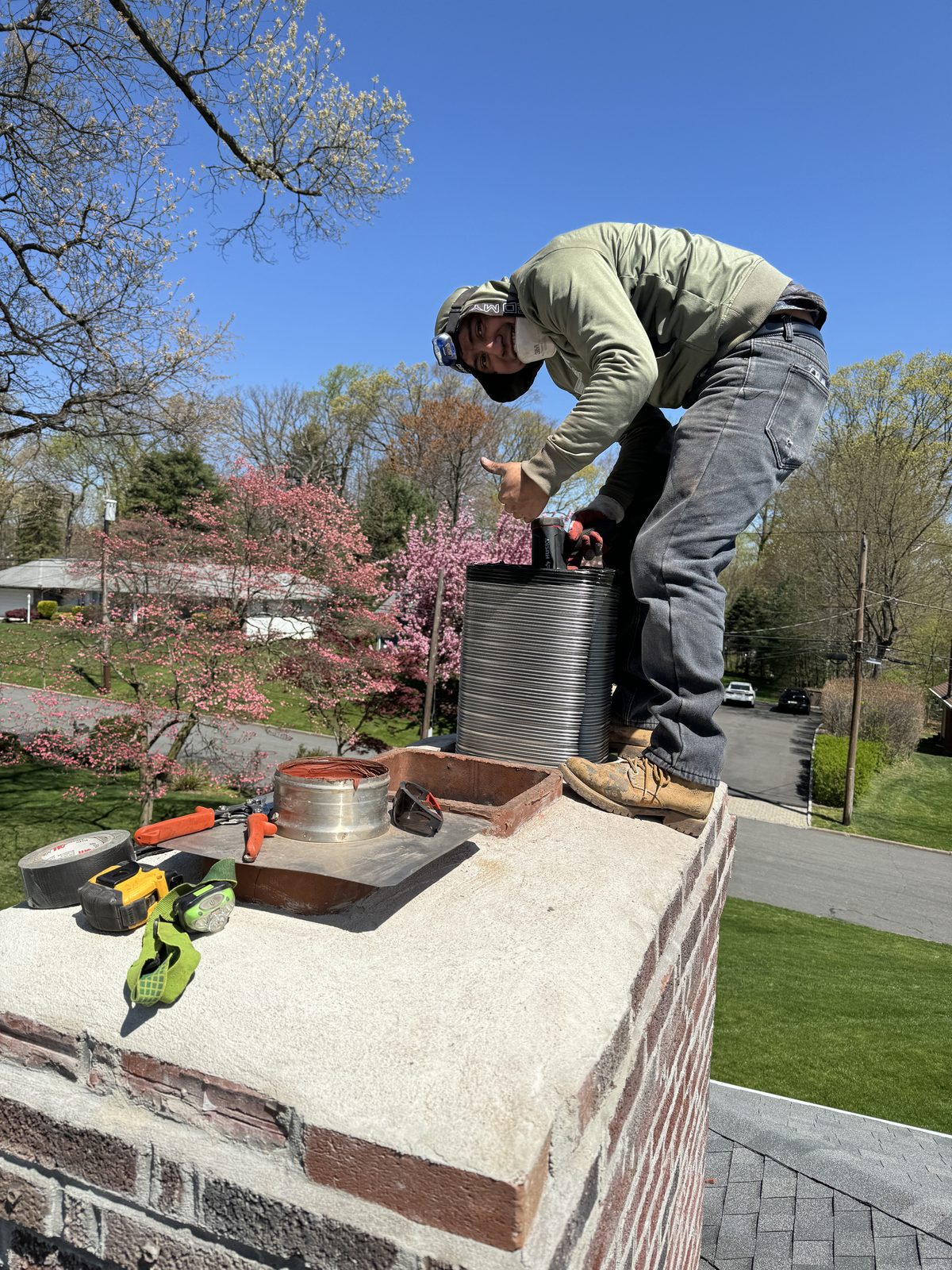
Most installs are finished in one day. Breaking out old tile, rebuilding a crown, or two liners in the same chimney can add a second day. The heating appliance is only out of service for the part of the day it is disconnected.
Does a chimney liner need insulation?
Sometimes it is required, and often it is worth adding anyway. Many older chimneys were built without the clearance between the masonry and the house framing that current standards call for, and a liner system's listing may require an insulation wrap to make up for it. It comes up most with wood-burning appliances.
Beyond the requirement, insulation keeps the exhaust warm on the way up. That improves draft and cuts down on condensation and creosote, which matters most on a chimney built up an outside wall, where cold air works on the flue the whole way up. We wrote about that on a liner job in Mount Arlington.
Stainless steel or aluminum: what should a liner be made of?
A liner for a fireplace, a stove, an oil appliance or anything burning wood should be stainless steel, in an alloy rated for the fuel, and part of a system listed to UL 1777, the safety standard for chimney liners. Oil is the hardest fuel on steel, so oil flues need the more corrosion-resistant grade.
Aluminum liners exist and cost less. They are only for certain gas appliances, and they do not stand up to condensation the way stainless does. Flexible stainless is the usual choice because it follows the bends most chimneys have. Rigid sections suit straight runs and are sometimes the better choice for wood. If a quote does not say what the liner is made of, ask.
What to ask before you hire someone to reline
- Will you show me the camera footage, before and after?
- How did you size the liner? The answer should start with the appliance or the fireplace opening, not the old flue.
- Is it stainless, which alloy, and is the liner system listed to UL 1777?
- Does this chimney need insulation, and is it included?
- Who files the F370 permit, and when will the town inspect?
- What does the warranty require? Many lifetime liner warranties depend on the liner being installed to its listing and inspected every year.
Liner installation questions
How long does it take to install a chimney liner?
Most stainless steel liner installs are finished in one day, including the sweep, the install, the top plate and cap, and testing the appliance. Breaking out old tile, rebuilding the crown, or lining two flues in one chimney can add a second day.
Can a chimney liner be installed in the winter?
Yes. Liners are installed year-round, as long as the roof is safe to work on. Ice or heavy snow can push the day back. The furnace, boiler or water heater is only disconnected for part of the day, so the house is not without heat overnight.
Do I need to be home for a chimney liner installation?
Someone needs to let the crew in at the start, because part of the work happens at the appliance or fireplace inside. We also go over the camera footage at the end. Between those, most homeowners go about their day.
Who inspects a chimney liner after installation in New Jersey?
The inspector from your town's construction office, under the F370 mechanical permit filed before the work. FlueRite files the permit and arranges the inspection, and the approval stays on record with the town.
Can a liner be installed in a chimney with a bend or offset?
Usually. Flexible stainless liners are made to follow the bends and offsets that many chimneys have. Where the tile at a bend is too tight for the liner to pass, those sections are broken out first. The camera inspection shows this before the job is quoted.
Does a new stainless liner still need an annual inspection?
Yes. NFPA 211 calls for every chimney and vent to be inspected once a year, lined or not. A stainless liner will not crack like clay tile, but caps clog, nests and debris block flues, and appliances get replaced. Annual inspection is also a condition of many liner warranties.
When we tell you not to reline
If the camera shows a sound flue, sized correctly for what it serves, you do not need a liner, and we will tell you that and show you the footage. Sometimes the real fix is a cap, a crown or a cleaning. A liner is the most involved job we do, and it should only go into a chimney that needs one.
Thinking about relining your chimney?
We start with a camera, size the liner to what it serves, file the F370 and show you the flue before and after. Montville and all of Morris County.
CSIA Certified · NJ HIC #13VH14202300 · Serving Morris County