Chimney flue repair in East Hanover, NJ
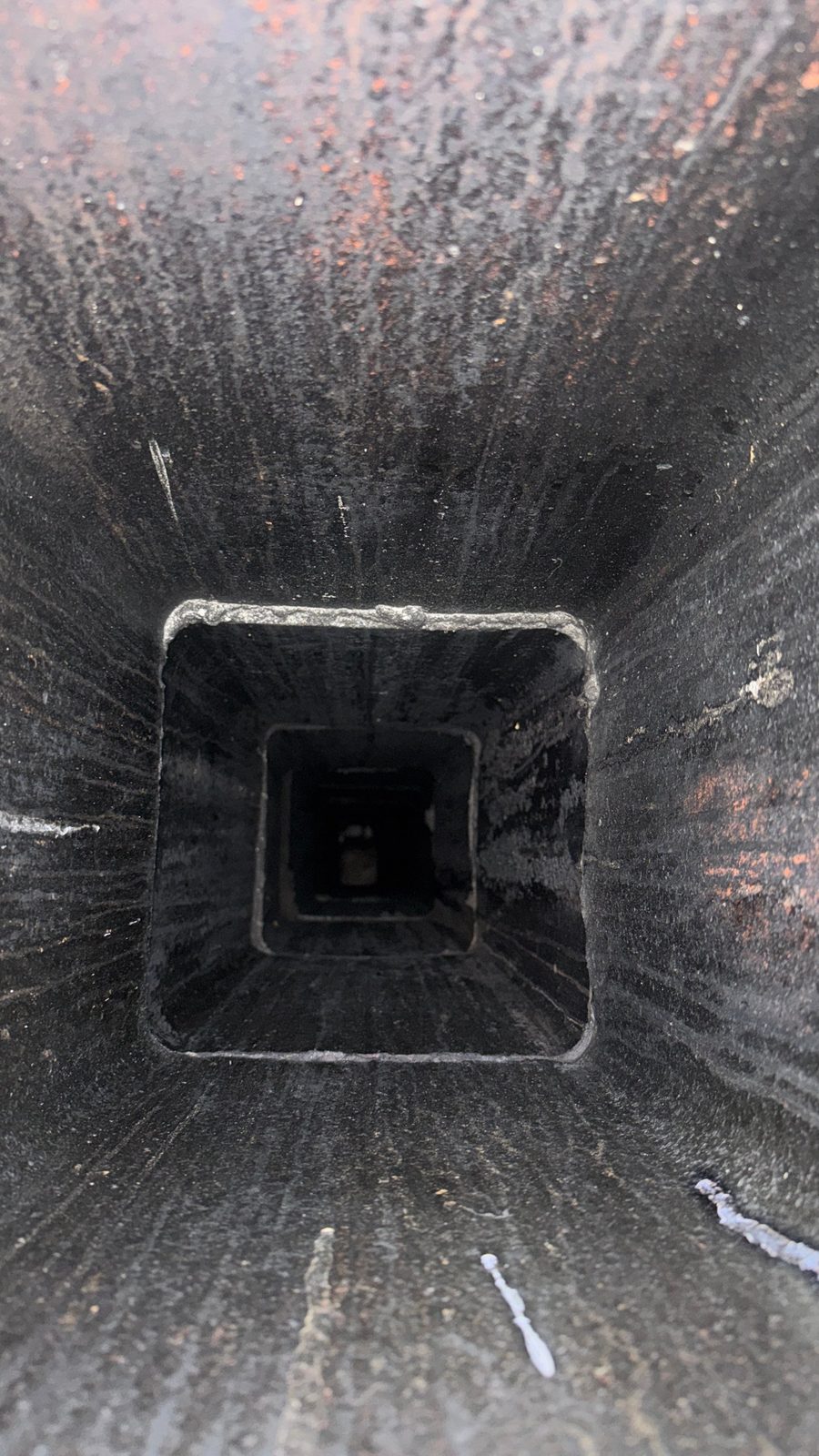
What we found looking down this flue.
The photo is taken from the top of the chimney, looking straight down a clay tile flue. None of this is visible from the living room.
FlueRite inspects and repairs chimney flues in East Hanover, from damaged clay tiles to full relining with a stainless steel liner. On this job, the inspection found the clay flue in poor condition, with worn tile walls, rough and deteriorated joints between sections, and buildup coating the inside, the kind of damage that means the flue is no longer doing its job.
- Location
- East Hanover, NJ 07936
- Work done
- Flue inspection, damaged clay flue tiles found
- Flue
- Square clay tile, viewed from the top
- Permit
- None for inspection. Relining needs NJ UCC form F370, which we file
- Season
- Fall 2026
What the flue tiles are there for
A masonry chimney is two things: the brick you see from the yard, and the flue inside it. The flue is the channel the smoke and exhaust actually travel through. In most homes built in the last seventy years it is made of square clay tiles stacked inside the brick, with mortar joints between each section.
The tiles do three jobs. They hold heat in so it does not reach the wood framing around the chimney, they keep acidic exhaust off the brick and mortar, and they give the smoke a smooth, correctly sized path so the chimney drafts. When the tiles crack or the joints open up, all three jobs start to fail at once.
What bad flue tiles look like
Open or crumbling joints. The mortar between tile sections erodes, leaving gaps that let heat and exhaust reach the brick. The joint in the photo is rough and uneven where it should be a clean, tight seam.
Cracked or flaking tiles. Clay tiles crack from a chimney fire, from water freezing behind them, or from decades of heating up and cooling down. Pieces flaking off the inside face are a sign the tile is breaking down.
Heavy coating on the walls. Buildup on the tile walls narrows the flue and hides cracks underneath it. It has to come off before the tiles can be properly judged.
Shifted sections. Tiles that have moved out of line leave a ledge for debris to collect on and a gap for exhaust to escape through.
East Hanover chimneys and their age
Much of East Hanover was built out in the decades after the war, with ranches, split-levels and colonials on both sides of Route 10. A lot of those chimneys still have their original clay flue, which puts many of them at sixty or more heating seasons.
Homes here have often changed heating systems along the way, from oil to gas, or to a newer high-efficiency furnace. A flue that worked fine for one appliance can be the wrong size for the next one, and that change is one of the most common reasons a clay flue starts to break down.
Your options for a damaged flue
Relining with stainless steel. The most common repair, and our specialty. A stainless steel liner, sized for the appliance it serves, is run down the inside of the existing flue and connected at both ends. It is the standard fix when the tiles are damaged along more than one or two sections.
Replacing tiles near the top. When the damage is limited to the top tile or two above the roofline, those sections can sometimes be replaced without relining the whole chimney.
Cast-in-place lining. A mortar-based lining formed inside the old flue. It can make sense for some older or irregular chimneys.
Which one is right depends on how far the damage runs and what the flue serves: a fireplace, a wood stove, or a furnace and water heater. That is decided after a full inspection, not from the top tile alone.
Why a damaged flue matters
Heat escaping through open joints can reach wood framing close to the chimney. Exhaust from a gas or oil appliance can leak through gaps into the brick, and in some cases into the house. Water and acidic condensation working through the joints break down the brick and mortar from inside, which shows up later as crumbling joints and stained masonry outside.
None of that is visible from inside the house, which is why flues like this are found during inspections rather than because a homeowner noticed something.
Flue questions from East Hanover homeowners
How do I know if my chimney flue is damaged?
Usually you do not, until it is inspected. Warning signs include pieces of tile in the fireplace or at the base of the chimney, smoke or odors where they should not be, and staining or crumbling masonry on the outside. A proper inspection looks down the full length of the flue, not just the top.
Can I keep using my fireplace with cracked flue tiles?
It is not recommended. Cracked tiles and open joints let heat and exhaust reach places they were never meant to go. Until the flue is repaired or relined, it is safer to leave the fireplace out of use. If the damaged flue serves a furnace or water heater, have it looked at promptly rather than waiting.
Do I need to rebuild the chimney to fix the flue?
Rarely. In most cases the brick chimney is sound and only the flue has failed. A new stainless steel liner runs inside the existing chimney, so the outside stays as it is.
Does relining a chimney need a permit in New Jersey?
Yes. Installing a liner is mechanical work under the New Jersey Uniform Construction Code and needs form F370 filed with the local construction office. We file it as part of the job. An inspection on its own does not need a permit.
How long do clay flue tiles last?
Clay tiles can last for the life of the house when the chimney is kept dry, capped and used with the appliance it was built for. In practice, water, chimney fires and changes in heating equipment shorten that, and many tiles in older homes show damage after fifty or sixty years.
Do you serve all of East Hanover?
Yes, all of East Hanover, along with Whippany, Florham Park, Livingston, Parsippany and the rest of Morris County.
Not sure what is going on inside your flue?
Book an inspection. We look down the full length of the flue, show you what we find, and tell you plainly whether it needs work now.
Worried about the flue in your chimney?
We inspect clay flues top to bottom and reline them with stainless steel when they need it. East Hanover, Whippany, Florham Park and the rest of Morris County.
CSIA Certified · NJ HIC #13VH14202300 · Serving East Hanover & Morris County