Do I need a chimney cap?
The cheapest part protecting the most expensive one.
A cap is a small piece of metal on top of the chimney. What happens without one is not small.
Morris County, NJ · Caps & Chimney Tops
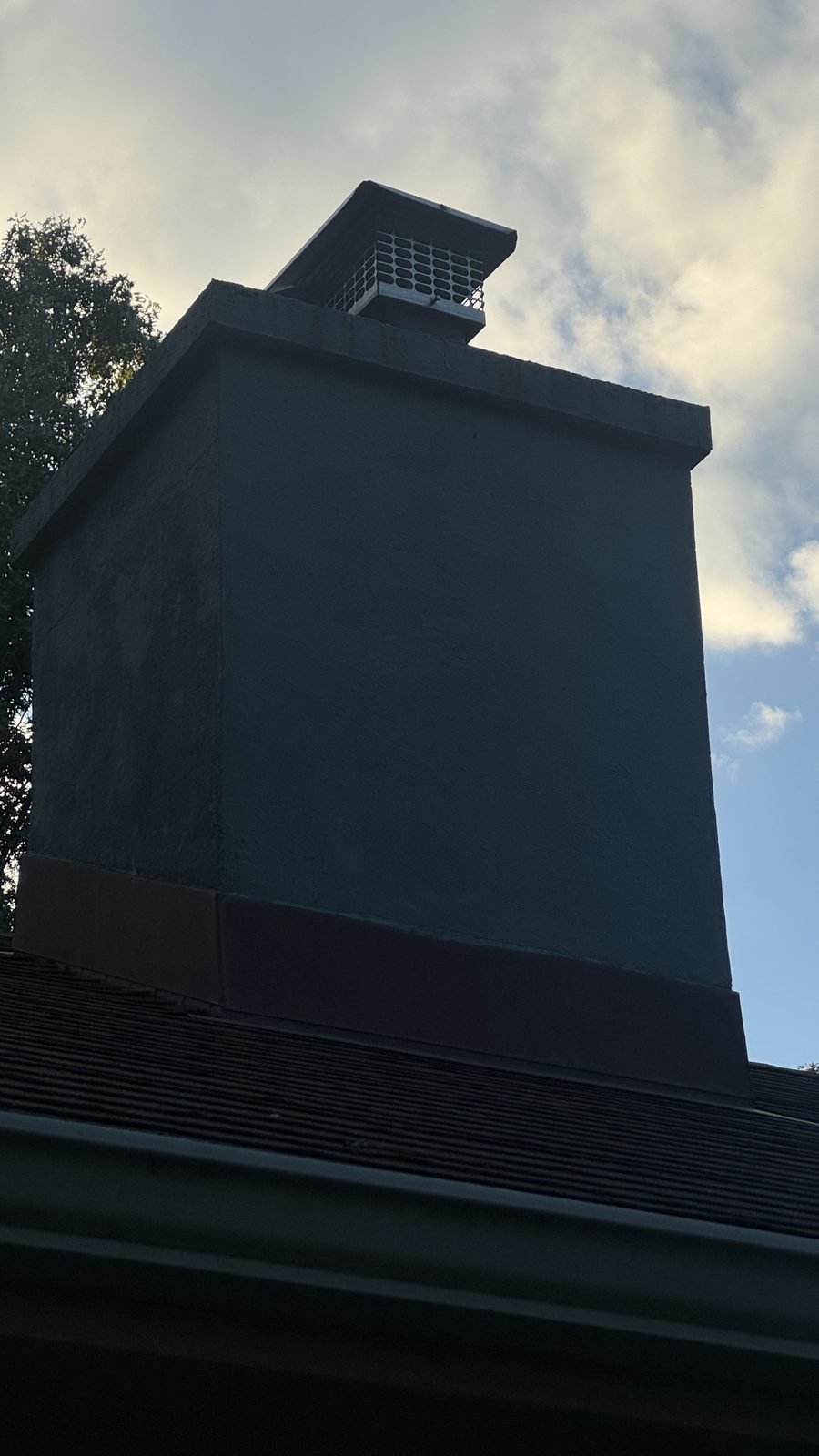
Of everything we install, the chimney cap gets the least thought from homeowners and causes some of the most expensive damage when it is missing. It sits forty feet up, nobody looks at it, and when it fails or blows off, nothing seems different from inside the house for a long time.
The short answer is that any chimney with a working flue needs one. The longer answer is about what a cap actually stops, and what separates a cap that lasts the life of the chimney from one that is a rust stain in three years.
What an uncapped flue lets in
Rain, first and worst. An open flue is a pipe pointed straight up. Every storm sends water down it onto the damper, the smoke shelf and the firebox floor. Dampers rust shut or rust through. Water soaks the mortar joints in the smoke chamber and the clay tile, and in a North Jersey winter that water freezes in the joints and opens them a little wider every cycle. When we find a cracked flue under an open top, the missing cap is usually where it started.
Animals. Raccoons den on the smoke shelf, squirrels fall in and cannot climb the tile back out, and birds build nests that block the flue entirely. Chimney swifts are federally protected, so once a nest is active it generally has to stay until the birds leave for the season. A blocked flue on a fireplace is a smoke problem. On a furnace or water heater it is a carbon monoxide problem.
Wind. A gust across an open flue can push air down the chimney instead of letting it rise. The lid on a cap breaks that up, which is why a fireplace that smokes into the room on windy days sometimes stops once a cap goes on.
Embers out. The screen on the sides works in the other direction too, catching sparks before they land on the roof or in the leaves.
Cap, crown and chase cover are three different things
This is where most of the confusion comes from. The cap covers the flue opening. The crown is the concrete slab across the top of a masonry chimney that sheds water off the brick. A chase cover is the metal pan that closes the top of a framed chimney, the kind with siding or stucco instead of brick around it, and the flue passes up through it.
They fail independently. A brand new cap on a cracked crown still lets water into the brick, and a perfect crown does nothing for an open flue. When someone says the chimney was capped last year, we still look at all three.
What separates a good cap from a bad one
Material. Galvanized and black-painted steel caps are sold at every hardware store and look fine the day they go up. The coating weathers and burns off, the steel underneath rusts, and within a few years it is streaking orange down the crown and face of the chimney. Stainless steel is the standard for a cap meant to last, and copper is the alternative where appearance matters. Both outlive the chimney under them.
Fit. A single-flue cap clamps to the flue tile, so it is sized to the outside of the tile and needs tile standing proud of the crown to hold onto. When a chimney has more than one flue, or the tile was cut flush with the crown, the answer is usually a multi-flue cap that mounts to the crown itself and covers every flue at once. A cap that is the wrong size for the tile is a cap that moves in the wind, and a cap that moves eventually leaves.
Screen. The mesh has to be small enough to stop animals and embers and open enough not to choke the draft. It also has to suit the fuel. A screen that is right for a wood fireplace can clog with soot on an oil-fired appliance, and a clogged screen on a heating appliance blocks the exhaust it is supposed to let out. We match the screen to what the flue serves.
Lid height and overhang. The lid needs to sit high enough above the flue that it does not restrict the exhaust, and overhang far enough that rain driven sideways still misses the opening.
Signs your cap needs replacing
From the ground with a phone zoomed in, look for orange rust streaks on the crown or below it, a lid that sits crooked, screen that has torn or rusted open, or no cap at all. Inside, water in the firebox after rain, a rusted or seized damper, a musty smell from the fireplace in summer, or scratching and chirping in the chimney all point the same way.
After a big wind storm, it is worth one look. Caps that were only ever held on by friction are the first things to come off the roof.
Common questions
Do I really need a chimney cap?
If the flue is in use, yes. An uncapped flue is an open pipe pointed at the sky. Rain runs straight down it into the damper, the smoke chamber and the firebox, animals nest in it, and on a windy day it can pull smoke back into the room. A cap is one of the least expensive parts of a chimney and it protects the most expensive one, the flue.
What is the difference between a chimney cap and a chimney crown?
The crown is the concrete slab across the top of the chimney that covers the brick and sheds water off the masonry. The cap is the metal hood over the flue opening that keeps rain, animals and debris out of the flue itself. They protect different parts of the chimney and fail for different reasons. A new cap does nothing for a cracked crown, and the reverse.
Galvanized or stainless steel chimney cap?
Stainless. Galvanized caps are cheaper and look identical on the shelf, but the zinc coating burns and weathers off and the steel underneath rusts, usually within a few years. Rust then streaks down the crown and the face of the chimney. A stainless cap is made to outlast the chimney under it, and most carry a lifetime warranty. Copper is the other long-life option when appearance matters.
What size chimney cap do I need?
It depends on the flue, not the chimney. A single-flue cap is sized to the outside dimensions of the flue tile it clamps to, and needs enough tile standing above the crown to grip. A chimney with more than one flue, or with tile cut flush to the crown, usually takes a multi-flue cap that mounts to the crown and covers every flue at once. Measure the tile, not the brick.
Can animals get into a chimney without a cap?
Easily. Raccoons climb in to den, squirrels drop in and cannot climb out, and birds nest on the smoke shelf. Chimney swifts are a protected species under federal law, so once they are nesting the nest generally has to stay until they leave for the season. A capped flue avoids the whole problem.
Does installing a chimney cap require a permit in New Jersey?
No. Under the New Jersey Uniform Construction Code, caps, crowns, masonry, flashing and sweeping are all outside the permit requirement. Liner installation is the exception in chimney work, since it falls under the mechanical subcode and requires form F370.
Why does my chimney cap whistle or rattle?
Usually a loose lid, a mounting screw that has backed out, or a cap that was never sized to the tile and is moving in the wind. A properly fitted cap should be silent and should not shift by hand. A cap that rattles is working itself loose, so it is worth having it re-secured before a storm takes it off.
While someone is up there
A cap installation is the one time most homeowners will have someone standing on top of their chimney, so it should not be just a cap installation. We photograph the crown, the flue tile and the flashing on the way up and show you what we found, whether or not any of it needs work.
Usually it is just a cap. When it is not, you would rather hear about the crack in the crown now than from a ceiling stain in February.
No cap, or one that is rusting out?
Stainless caps sized to your flue, with photos of the crown and flue tile while we are up there.
CSIA Certified · NJ HIC #13VH14202300 · Licensed & Insured