Chimney chase cover in Bloomingdale, NJ
A metal lid that keeps the whole chase dry.
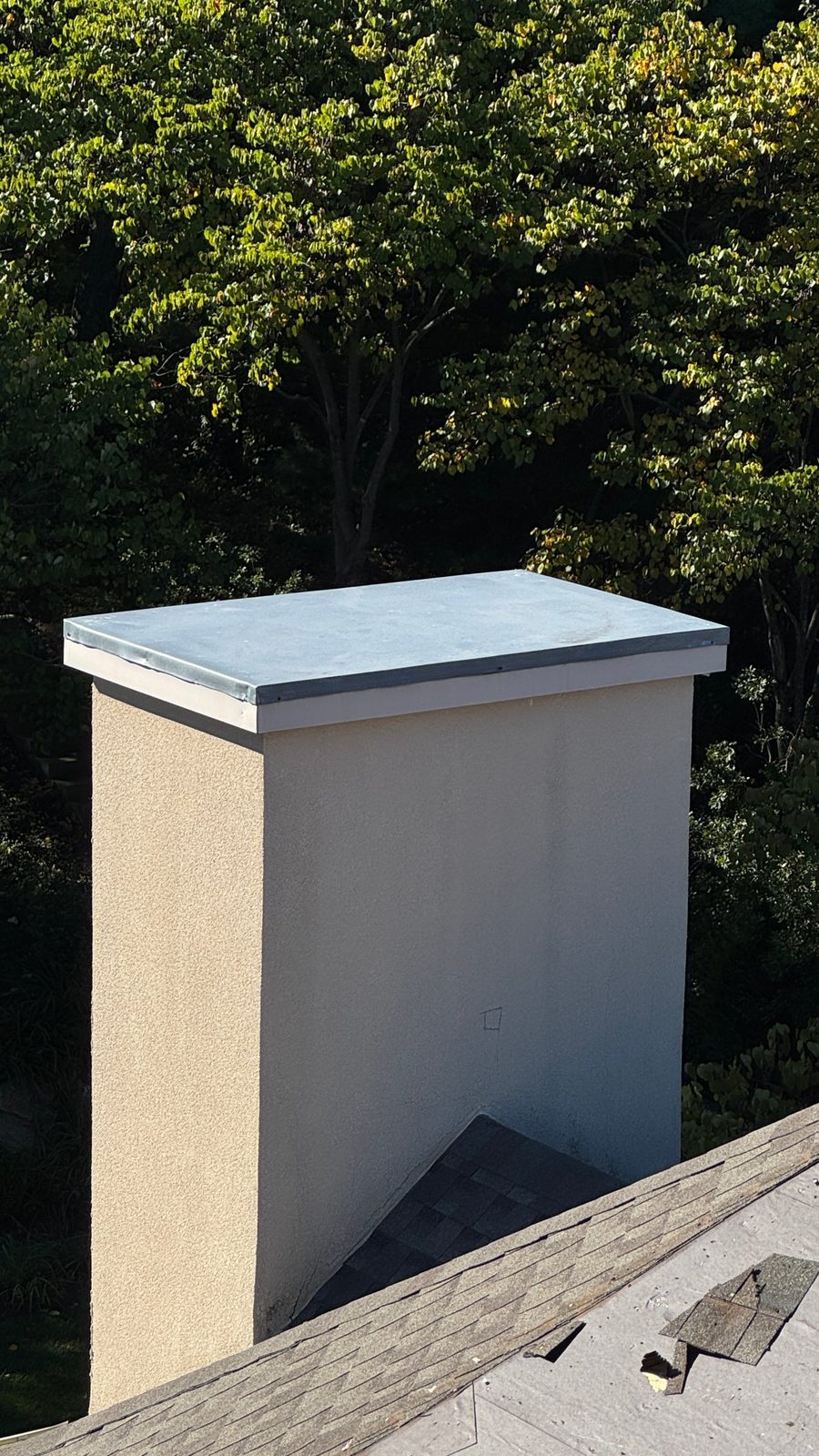
A new chase cover fitted to the top of a stucco chimney, with its edge turned down over the trim board.
FlueRite installs metal chase covers on chimneys in Bloomingdale, the panel that caps the top of a framed or stucco chimney and keeps rain and snow out of the inside of the chase. On this job we fitted a new cover to the top of a stucco chimney, with the edge turned down over the trim so water drips clear of the walls.
- Location
- Bloomingdale, NJ 07403
- Work done
- New metal chase cover
- Chimney
- Stucco-finished chase
- Permit
- None required for a chase cover in NJ
- Season
- Fall 2026
A chase cover is not a crown
A brick chimney is topped with a concrete crown. A framed chimney, built from wood and finished in stucco or siding, cannot carry one, so it is topped with a metal panel instead: the chase cover. It spans the whole top of the chase, has a collared opening for each flue, and folds down over the sides.
Because the structure under it is wood, the chase cover is the only thing standing between the weather and the inside of the chimney. When a crown cracks, water reaches masonry. When a chase cover fails, water reaches plywood, framing and insulation.
How chase covers fail
Rust. Many original covers are thin galvanized steel. Once the coating wears through, they rust from the top down and start leaking at the seams and fastener holes.
Sagging and dents. A panel that has sagged or been dented holds water instead of shedding it. Standing water speeds up rust and finds every pinhole.
Short skirts. A skirt that stops at the top of the wall lets water run straight down the face of the stucco instead of dripping clear of it.
Loose storm collars. The collar where the flue pipe passes through the cover dries out and loosens, and water runs down the pipe into the chase.
Bloomingdale’s weather is hard on the top of a chimney
Bloomingdale sits against the Ramapo Mountains, with homes on hillsides and around Lake Iosco, Glenwild Lake and Kampfe Lake. Chimneys on those hillsides take wind-driven rain head on, and the tree cover drops leaves that sit on a chase cover and hold moisture against the metal.
Winters bring repeated freeze-thaw cycles and snow that sits on the top of the chase for days. A cover that is already thin or rusting tends to give out after a winter like that, and the first sign is often a stain inside the house rather than anything visible from the yard.
What a good chase cover has
Heavier, corrosion-resistant metal. Stainless steel or a heavier coated steel, rather than thin galvanized sheet.
A full skirt with a drip edge. The sides fold down past the top of the wall, so water drips clear of the stucco and trim instead of running down them.
Made to fit the chase. Chases are rarely a standard size. A cover measured and made for the chimney sits tight on all four sides.
Fastened at the sides. Secured through the skirt into the chase, keeping holes in the top surface to a minimum.
Signs your chase cover is failing
Rust streaks running down the stucco below the top of the chimney. Water stains on a ceiling or wall near the fireplace after a storm. Cracked or bubbling stucco near the top of the chase. A cover you can see sagging or rusted from the street. Any of those is worth a look before the next winter.
Chase cover questions from Bloomingdale homeowners
What does a chimney chase cover protect?
The inside of a framed chimney: the wood framing, sheathing and insulation around the flue pipe. It seals the top of the chase and folds down over the sides, so water drains off the structure rather than into it.
Is a chase cover the same as a chimney cap?
No. The chase cover seals the top of the chase itself. The chimney cap sits above the flue opening and keeps rain, animals and debris out of the flue. Most framed chimneys need both.
How long does a chimney chase cover last?
Thin galvanized covers often rust through in ten to fifteen years in this climate. A heavier stainless cover, made to fit and installed properly, should last for decades.
Can a rusted chase cover be painted or patched?
Paint and sealant can slow rust for a season, but once the metal is rusting through at the seams and fasteners, replacement is the lasting fix. Patching over rust usually just moves the leak.
Why is my stucco chimney stained below the top?
Rust-colored streaks usually come from the chase cover above. Dark staining or cracking stucco near the top often means water has been getting behind the stucco, which is worth checking before the framing underneath is affected.
Do you work in Bloomingdale even though it is in Passaic County?
Yes. We are based in Montville and serve Bloomingdale, Butler, Kinnelon, Riverdale and the surrounding towns in Passaic and Morris counties.
Seeing rust at the top of your chimney?
Send us a photo or book an inspection. We check the chase cover, the cap and the stucco below it, and tell you what needs to happen and what can wait.
Rust or leaks at the top of your chimney?
We measure and fit chase covers that shed water off the chase for good. Bloomingdale, Butler, Kinnelon and the surrounding towns.
CSIA Certified · NJ HIC #13VH14202300 · Serving Bloomingdale & North Jersey